
Auglaize County Civil Docket Searches
Auglaize County splits its public CourtView access by court. General Division civil cases, along with most Domestic Relations work, run through Common Pleas CourtView. For Municipal civil and small-claims matters, use Municipal CourtView. The county's own search tips favor an exact case number when you have one, or at least three surname letters plus a first initial, with spelling variations tried.
When a match comes back, read the register in date order. Check the caption, year, division, and case type before you trust it. One local online-payment example, the case number 2019CV0241, shows a workflow in action, but it does not promise how every Auglaize County case number will look.
- Select the CourtView route for the court named in the case material.
- Search the exact number first, then narrow a name search.
- Confirm the court, caption, and case type.
- Review the latest filings, orders, and settings in sequence.
- Ask the clerk for a copy when an image or official record is needed.
Auglaize Civil Court Paths
Which court you need depends on the claim. Common Pleas General Division takes civil matters the county describes as typically above $15,000, injunction-related relief, and appeals from state agencies. Municipal Court generally reaches civil claims through $15,000 under R.C. 1901.17. Treat those figures as orientation. They cannot replace jurisdiction, remedy, transfer, or local-rule analysis in a real case.
Domestic Relations stands apart as its own division. Divorce, dissolution, protection orders, post-decree matters, and support proceedings belong there, and a generic civil search will miss them even though the division shares the Common Pleas complex.
| Case route | Usual docket source | Examples noted by county |
|---|---|---|
| General Division civil | Common Pleas CourtView | Higher-value claims, injunction-related relief, agency appeals |
| Municipal civil or small claims | Municipal CourtView | Regular civil, small claims, garnishment, executions |
| Domestic Relations | Common Pleas route and division contact | Divorce, dissolution, protection orders, support |
Civil Dockets: What They Show
A civil docket is a register of actions, not the whole case file. Entries can cover a complaint, an answer, a service event, a motion, a judicial entry, a scheduling notice, a judgment, or an appeal notice. Read each one with care. A service entry can be unsuccessful or challenged. A motion listed as filed has not necessarily been granted. A judgment label, likewise, may leave collection or appeal work still to come.
| Case number | Exact local identifier; retain leading zeros and the court's own format. |
|---|---|
| Parties | The caption identifies the parties, but it does not state the merits. |
| Service | Tracks notice or delivery events and may show a return or later issue. |
| Motions and entries | Requests and court actions, each with its own filing or entry date. |
| Judgment or disposition | A result entry that may be followed by appeal, enforcement, or other proceedings. |
Auglaize Small Claims Transfer Rule
Small claims does not always stay a separate track. Under the Municipal local rules, a motion to move a small-claims matter onto the regular civil docket must come at least five days before trial with the required showing. Miss that window and the request may be denied. The same dispute can then carry different docket entries, timing, and formality at different stages. That is exactly what this rule explains.
So keep the court and case type in view when reading a civil docket. A small-claims heading, a transfer request, or a later regular-civil event carries procedural meaning. A name-only search simply cannot supply it.
What Cases Fill the Civil Docket
The county's current cost schedules hint at the range of civil work that generates docket entries: ordinary complaints, foreclosure, service by publication, counterclaims, third-party actions, post-judgment filings, dissolution or divorce matters, administrative appeals, sealing, eviction, small claims, garnishment, debtor examinations, escrow, and appeals. A cost category is not a jurisdiction chart. It does show why case type matters so much.
For a specific civil file, trust the docket's caption and labels. Classifying a matter from a single payment or service entry invites error. The Domestic Relations Court page lays out that distinct division and the role it plays for the public.
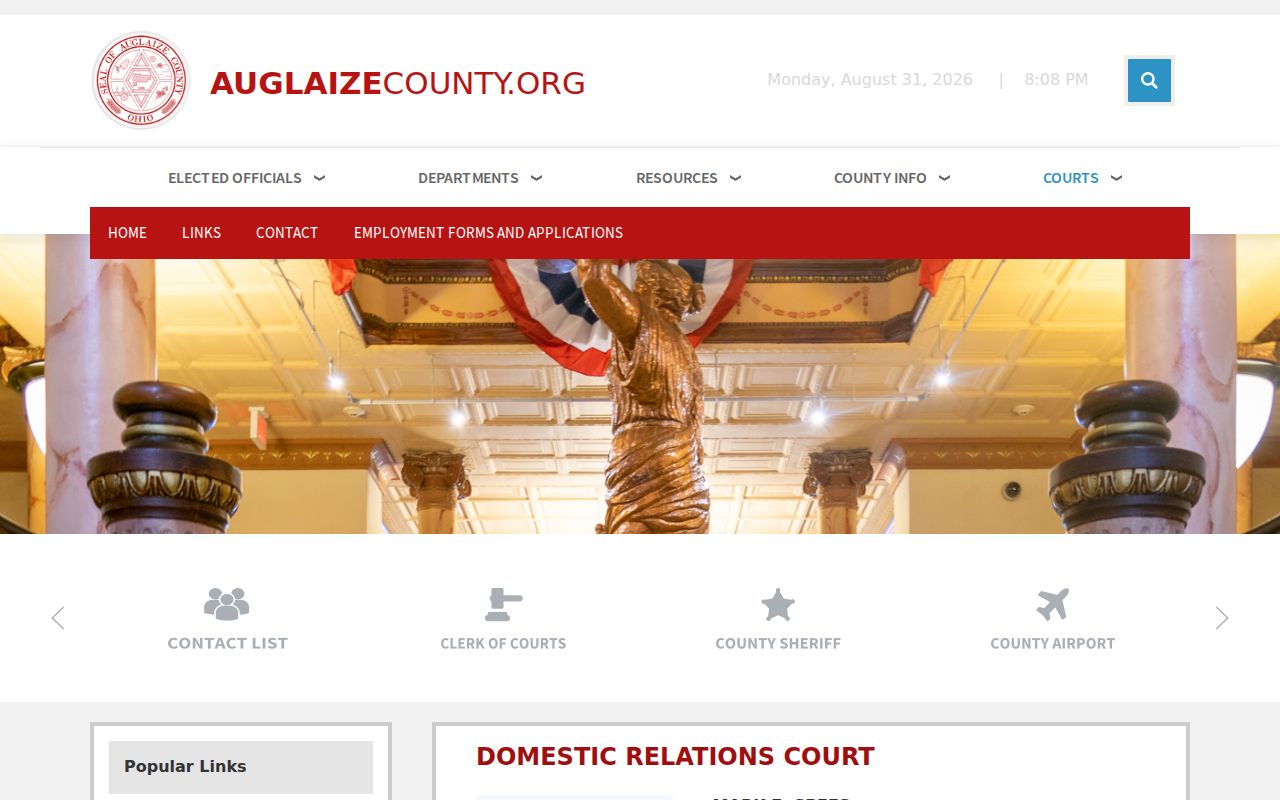
That separate division is reason enough to begin an Auglaize civil docket search with the court path. A broad label alone will not carry you there.
Auglaize Civil Fees Need Confirmation
Fees need a fresh check every time. The published Municipal costs schedule and the July 2026 local-rules appendix disagree on some line items, including a non-personal garnishment amount. So treat neither as silently controlling for a current filing or payment. Look at the document date. Use the official schedule the court links, and confirm the amount with the clerk before sending money.
Copy costs call for the same caution. The county posts no universal plain-copy price, no Common Pleas certified-copy price, and no standard turnaround time. The Municipal Rules set a $1 certified copy fee. That figure applies only in that court's rule context. The Municipal civil-jurisdiction statute supplies the state-law backdrop for the Municipal civil route.
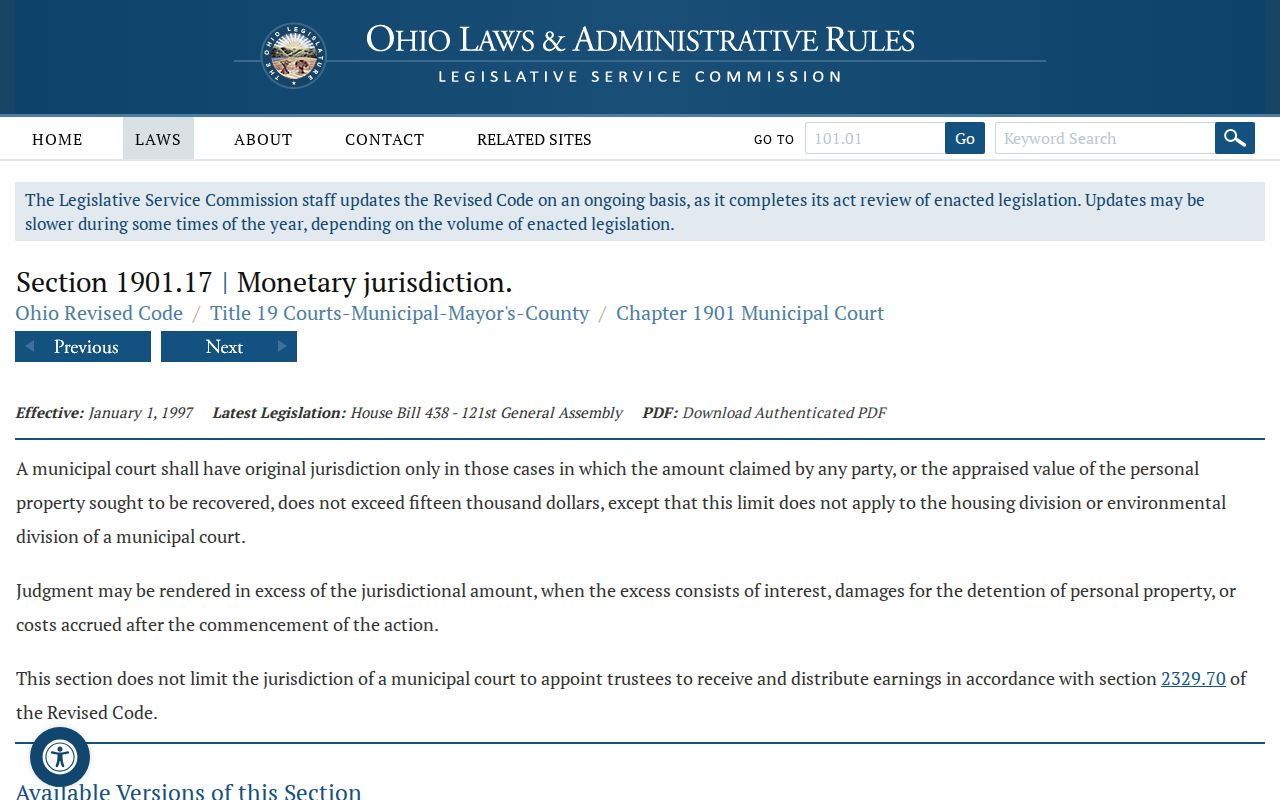
Rely on the current local schedule and the clerk for fees. An old docket entry or a generalized amount will not do.
Hearings on the Civil Docket
A civil setting in Auglaize can take many forms. Expect a scheduling conference, a pretrial, a motion hearing, a trial, or another docket-management event. The calendar is a search aid, not a promise. A continuance, settlement, assignment, or courtroom decision can change a setting, so the notice, the live docket, and confirmation from the court control what actually happens.
Municipal civil rules add a back-up trial process. The court tries to tell parties as early as possible, and no later than three days before trial, whether the trial will proceed or be preempted. A trial-day listing is therefore not the same as a final personal confirmation. The Court Schedule collects the county's calendar channels.
Auglaize Civil Images and Copies
A docket entry can show up even when its document image is missing. The county's public-access materials include a November 15, 2024 notice describing a technical issue with CourtView images, and other county guidance says docket images are simply not available. So treat the live portal as the first stop, not the last word. If the image matters to your case, request the document from the clerk or the division that handles the case.
Auglaize Civil Appeals Are Separate
Filing a notice of appeal starts a whole new case at the Third District Court of Appeals. The Auglaize County Common Pleas or Municipal civil docket stays the trial-level record. The appeal builds its own record apart from it. A trial-court docket may note that an appeal notice was filed, but it can never stand in for the appellate docket, the briefs, or the decision.
That split matters most after a judgment entry. A post-judgment filing, a payment, or an appeal notice should be read as its own docket event. It does not tell you whether the appeal changed the trial-court outcome. For that answer, use the court holding the appellate record and its exact case number.
Who Can See Civil Dockets
Ohio court-record access runs through the Rules of Superintendence 44 through 47. It is not just the general public-records statute. Rule 45 starts with public access. Still, a court may redact or limit remote access. It may use initials, give generic descriptions, or issue a restriction order. The county also says public CourtView data is not an official record.
Domestic Relations and other civil files can hold protected material. A restricted entry is no reason to guess at a document. It is also no reason to fish for hidden content through a broad request. Trust the stated status, the rule behind it, and the clerk's lawful access route.
Access baseline: Ohio Sup.R. 44-47 addresses access, redaction, and restriction. R.C. 149.43 remains the Ohio public-records baseline.